
Thursday, 4:15 p.m., at a practice off Research Forest. A mom calls because her son’s general dentist in Spring mentioned a crossbite at his cleaning. She has already called two other offices. Her first question isn’t about the doctor’s training or the technology. It’s “do you take our insurance, and what’s the monthly payment?”
Ten minutes later a 34-year-old engineer books a consult from an Instagram ad. In the notes field she writes that she started aligners with a mail-order company years ago, never finished, and wants to know if that’s fixable.
Those two people are most of orthodontist marketing in Houston. One is a parent making a decision for a child, usually on a referral, and shopping on price and convenience. The other is an adult choosing for themselves, often after a bad experience somewhere cheaper.
To get more orthodontic patients as an independent practice, win the Google Maps results for “orthodontist near me” in your part of town and treat your general dentist referrers like your best customers. Run search ads on braces and clear aligner terms (carefully, because of trademark rules). Make the free exam easy to book and the monthly payment easy to understand. Then measure everything by cost per start rather than cost per lead.
We’ve worked with dental specialists, including Omega Dental Specialists, and this is how we’d set up a single- or two-office ortho practice from Conroe down to Katy.
Who you’re actually competing with
An independent orthodontist in north Houston has three kinds of competition, and each needs a different answer.
DSO-backed ortho groups. Multi-office brands with central call centers, big ad budgets and Saturday hours. They usually win on convenience and spend. You beat them with the doctor’s face and name, faster callbacks, and the referral relationships they can’t buy.
General dentists offering aligners. Plenty of family dentists in The Woodlands, Cypress and Sugar Land now treat simple aligner cases in-house. That can feel like losing referrals. In practice it means your marketing has to explain, without trashing anyone, which cases need a specialist.
Direct-to-consumer aligners. SmileDirectClub filed for Chapter 11 in September 2023 and shut down in December 2023, canceling pending orders and telling patients to arrange follow-up care with local dentists, per DrBicuspid. Other mail-order brands remain. The collapse left a lot of adults with unfinished treatment and a healthy distrust of “cheap and fast.” That’s an audience, and a respectful “started treatment elsewhere?” page speaks to it directly.
| Competitor | Where they win | Where an independent wins |
|---|---|---|
| DSO ortho group | Ad spend, hours, call center, brand recognition | Same doctor every visit, local reputation, referral network, faster personal follow-up |
| General dentist doing aligners | Existing patient trust, convenience | Complex cases, kids’ growth timing, braces and aligners both, specialist training |
| Mail-order aligners | Price, no office visits | In-person supervision, X-rays, refinements, a doctor who answers when something goes wrong |
Two buyers: parents and adults
Parents. the American Association of Orthodontists recommends kids have their first check-up with an orthodontist by age 7, and its site tells parents they can book directly without a dentist’s referral. That gives you a clean, non-salesy message. “Free orthodontic check-up for kids 7 and up. No referral needed.” Most won’t start treatment that year, but they enter your recall system.
Parents shop on a few practical things: insurance, the monthly payment, how many school days the appointments eat, and whether the office is on the way from school.
Adults. According to the AAO, about one in three orthodontic patients is now over 18. Adults decide faster than parents, research more online, and care a lot about discreet options, the total timeline and whether they’ll need to miss work.

Give these two groups separate pages, ad groups and follow-up sequences.
Google Business Profile and reviews for an ortho practice
For “orthodontist near me,” the map pack is the first thing most people see. Set the primary category to Orthodontist. Add services in plain words: braces, clear aligners, early (Phase I) treatment, adult orthodontics, retainers, second opinions. Upload real photos of the office, the doctor and the team, and a street-view shot of the entrance so a parent can find it at 3:45 with a carpool behind them.
Two offices means two verified profiles with their own hours. Our guide to ranking in the Houston map pack covers the rest of the ranking work.
Reviews matter even more in ortho than in general dentistry, because treatment runs 12 to 24 months and families talk at school pickup the whole time. The best moments to ask are when braces come off and at the first aligner check where the patient can see a difference.
The rules: under Google’s prohibited content policy for Maps, you can’t offer anything for a review, can’t ask only happy patients, and can’t discourage negative ones. Retire the “leave a review for a gift card” sign at the front desk and the debond-day prize wheel if it’s tied to reviews.
Replying is where practices get into HIPAA trouble. Elite Dental Associates in Dallas paid $10,000 to settle with HHS after its Yelp replies disclosed patients’ names and treatment details. A safe reply never confirms someone is a patient. “Thanks for the kind words, we love hearing this” works. “Glad your daughter’s expander went well!” does not. For angry reviews: “We take every concern seriously. Please call our office manager at [number] so we can talk directly.” Our complete guide to Google reviews has more templates.
Google Ads for braces and clear aligners
Search is where most new-patient intent shows up. Split campaigns by what the person is asking for, and send each one to a page that matches.
| Ad group | Example keywords | Landing page |
|---|---|---|
| Orthodontist (general) | orthodontist near me, orthodontist the woodlands, orthodontist spring tx, best orthodontist conroe | Homepage-style page with free exam booking |
| Braces | braces near me, braces for kids, braces cost houston, how much are braces | Braces page with payment range and insurance info |
| Clear aligners | clear aligners near me, invisible braces, clear braces for adults | Adult aligner page with timeline and consult booking |
| Early treatment | orthodontist for 7 year old, expander for kids, crossbite treatment child | Parent page built around the age-7 check-up |
| Second opinion / restart | finish aligner treatment, aligners didn’t work, orthodontic second opinion | “Started treatment elsewhere?” page |
Use the negative list below from day one, and keep adding from the search terms report weekly for the first month.

Settings that matter: target “Presence: people in or regularly in your included locations,” keep the radius to how far families will drive monthly (usually 8 to 12 miles in suburban Montgomery County, tighter inside the Beltway), and schedule call assets only for hours someone answers. Track booked exams and calls longer than about a minute as conversions, not page views. If you need help setting that up, our GA4 and Google Ads tracking guide walks through it, and the Houston CPC benchmarks give you a feel for click costs.
One policy note on retargeting. Google treats health as a sensitive category under its health in personalized advertising policy, which limits advertiser-built audiences like remarketing lists and Customer Match for ads about health conditions and medical procedures. Orthodontics isn’t named on that page, but ad reviews aren’t always predictable, and HIPAA (below) is a separate concern. We keep ortho retargeting simple and creative generic, or skip it.
Invisalign trademark rules: what you can and can’t say
Most patients search “Invisalign,” and many practices want to bid on it and say it everywhere. Align Technology has gotten stricter about who can.
According to an Orthodontic Products podcast on Align’s trademark enforcement (June 2025), Align sued a Portland, Oregon practice in May 2024 for placing Invisalign next to another aligner brand, and has sent cease-and-desist letters to practices that hadn’t ordered Invisalign treatment recently. The guests described Align allowing brand use only by active customers with recent case starts, and the letters covering website text, URLs, meta tags, image alt text, Google Business Profile, social accounts, Yelp and print. Their advice: confirm the current requirements with your Align rep, because thresholds can differ by practice type.
Separately, Align’s social media guidelines tell doctors not to put “Invisalign” in any username or handle, and to disclose their relationship with Align when they post about it. So @WoodlandsInvisalignSmiles is out.
On the Google side, Google’s trademark policy doesn’t restrict trademarks as keywords, but a trademark owner can restrict their use in ad text. In practice:
- If you’re an active Invisalign provider, using the name on a dedicated page is generally fine. Follow Align’s current brand guidelines and keep your provider status current.
- If you also offer other aligner brands, give each its own page under a “Clear aligners” menu. Don’t put brands side by side in a way that implies they’re the same thing.
- In ad text, “clear aligners” is the safe phrase. Bidding on the keyword “invisalign” is a separate question from writing it in the headline, and the podcast guest’s view was that you shouldn’t put Invisalign in your ads at all. Check with your rep before you do.
- If you stop offering Invisalign, clean the name out of everything, including old blog posts and image file names, and redirect any URLs that contained it.
Texas specialist advertising rules
Texas has specific rules on who can call themselves a specialist, and they work in your favor.
Under 22 Tex. Admin. Code § 108.54, a dentist may advertise as a specialist in orthodontics and dentofacial orthopedics only if they completed a CODA-accredited specialty program of two or more years or hold diplomate status from a qualifying specialty board. A specialist should use phrases like “specialist in” or “practice limited to” and limit their practice to the advertised specialty. Under § 108.55, a general dentist advertising specific services must put “General Dentist” or “General Dentistry” right after their name, in type no smaller than the largest font used for the services, and say it clearly in broadcast ads.
What that means for your marketing:

Specialist status is a real differentiator, so say it plainly: “Dr. Name is a specialist in orthodontics. After dental school, she completed a [X]-year orthodontic residency at [program].” Skip “the best” and “the only.”
If your marketing person writes copy for multiple offices or a group that includes general dentists, the practice owner carries the burden of avoiding any suggestion that the general dentists are specialists. Have someone who knows the rule read every ad. We’re marketers, not your attorney, so run anything borderline past one.
General dentist referrals still drive the practice
In most independent ortho practices we’ve seen, referring dentists produce the biggest share of new starts. Ads rarely beat a family dentist who tells a parent “go see Dr. Name, she’s great.” Yet referral marketing is the part almost nobody tracks.
What works in The Woodlands, Spring and Conroe:
- Know your top 20 referrers by name. Pull a report from your practice software of starts by referring office for the last 12 months. Most practices find a handful of offices send a large share.
- Close the loop fast. Send the referring dentist a short note after the exam and again at the start, with the treatment plan. A referrer who hears back keeps referring.
- Visit in person. Lunch for the hygiene team once a quarter. Hygienists spot crossbites and crowding and are the ones who actually say your name to the parent.
- Make referring easy. A one-page online referral form, a referral pad with your QR code, and a direct line that skips the phone tree.
- Send patients back. Remind every patient about cleanings, and route families without a dentist to your referrers. It’s the reason they keep sending you kids.
And never bid on a referring dentist’s practice name.
The price question: financing and payment plans
Back to the Thursday call. Before anything else, the mom wants to know the payment. Practices that hide all pricing until the exam lose a lot of these callers to the one that gives a range on the phone.
- Publish a range for comprehensive treatment and a typical monthly payment with your in-house plan, along with the down payment options. “Most comprehensive treatment plans in our office fall between $X and $Y, with in-house payment plans starting around $Z a month” is far better than nothing.
- Say whether the first exam is free, and what it includes (X-rays, photos, a treatment-fee estimate).
- Explain how ortho insurance usually works: a lifetime maximum, sometimes an age cap. Offer to check benefits before the exam.
- List third-party financing if you offer it, plus HSA and FSA payments. Houston’s energy employers often offer FSAs, and November and December are when families try to spend them down.
- Train whoever answers the phone to give the range, then book the exam.
A price page also helps with search, since people type “how much are braces in Houston” all day.
Instagram and Facebook ads for adult aligners and parents
Meta works better for adult aligner cases than for kids’ braces, because adults are choosing for themselves and respond to before-and-after stories and to the doctor on camera. For parents, Meta works best as a reminder of the free age-7 check-up and around back-to-school.
What to run:
- Short videos of the doctor explaining one thing, like what happens at the first visit.
- Patient stories, with written consent and a HIPAA authorization on file, and nothing that identifies a patient without it.
- A free consult offer with two qualifying questions on the form (who is the patient, adult or child; any previous treatment).
Watch Meta’s personal attributes policy. Ads can’t assert or imply things about the viewer’s personal attributes, which includes health. “Embarrassed by your crooked teeth?” implies the viewer has crooked teeth and tends to get rejected. “Straighter teeth in as little as [timeline] with clear aligners. Free consult in The Woodlands” describes the service and usually clears.
For forms, our post on fixing low-quality Facebook leads covers the questions that filter out people who aren’t serious.
HIPAA and tracking pixels on an orthodontic website
This is the part most marketing agencies get wrong with medical and dental clients. An ortho practice is a HIPAA covered entity, and its website is in scope.
In 2022 HHS’s Office for Civil Rights issued guidance on online tracking technologies like the Meta Pixel and Google Analytics, revised it in March 2024, and then lost part of it in court. On June 20, 2024, the Northern District of Texas vacated the portion that treated an IP address plus a visit to a public health information page as protected health information, per Holland & Knight’s summary of the ruling. HHS dropped its appeal in August 2024. The rest of the guidance, including the position that identifiable health information collected through a provider’s website or app is generally PHI, still stands.
Google also says on Google’s own HIPAA page for Analytics that it makes no representation that Analytics meets HIPAA requirements and that customers shouldn’t put Analytics tags on authenticated pages or pages likely to be HIPAA-covered.
What we do for health practices:
- No ad pixels or analytics tags on the patient portal, online forms that collect health information, or the booking flow after the patient starts entering details.
- Booking and intake through a HIPAA-compliant vendor that signs a business associate agreement.
- Conversion tracking based on “thank-you page loaded” or a server-side event that carries no health details, rather than form contents.
- Call tracking from a vendor that offers a BAA, if calls are recorded or transcribed.
- A written list of every script on the site, reviewed with the practice’s compliance advisor.
Measuring cost per start, and a first 90 days
Cost per lead lies in orthodontics. A Facebook form fill from someone who “just wanted to know the price” and a referral from a dentist with a crossbite diagnosis count the same. Cost per start is the number to run the practice on.

To see it, you need four counts by source every month: leads (calls, forms, chats), exams booked, exams kept, and starts. Your practice management software has exams and starts. Your call tracking and ad platforms have leads. Somebody has to match them, usually the treatment coordinator in a shared sheet, until you can automate it.
Speed matters at the lead stage. A parent who filled out a form at 9 p.m. is often calling another office at 8:30 the next morning. Our post on speed to lead covers the follow-up system.
A sensible first 90 days for an independent practice:
- Days 1 to 30: fix the Business Profile, build the parent, adult and “started elsewhere” pages, publish price ranges, clean Invisalign references to match your provider status, audit pixels, and set up call tracking and exam-booking conversions.
- Days 31 to 60: launch search campaigns by ad group above, start the review-request process at debond and first aligner check, and visit your top 10 referring offices.
- Days 61 to 90: add Meta for adult aligners, build the cost-per-start sheet by source, and move budget toward whatever produces starts.
On budget, many single-office practices we’d talk to spend somewhere between $2,000 and $6,000 a month on paid media, more in a new market. Treat that as illustrative. The right number comes from your measured cost per start and how many starts a month the doctor wants.
For the general dentistry side of the business, see our dental marketing guide, and our search marketing team handles campaigns like these. If you’d like a plan built around your offices and your referral base, get in touch.
Frequently asked questions
How do orthodontists get more new patients?
Most new starts come from general dentist referrals, Google Maps results for orthodontist near me, and search ads on braces and clear aligner terms. Independent practices grow fastest by keeping referrers informed after every exam, collecting reviews at debond, publishing price ranges and payment plans, and making the free exam easy to book online. Track every source through to treatment starts so you know what works.
Can I use the word Invisalign in my Google Ads?
Google does not block trademarks as keywords, but trademark owners can restrict their use in ad text, and Align Technology actively enforces its Invisalign trademark against practices that are not active providers. Many practices use clear aligners in ad text to stay safe. If you are a current provider, check Align’s brand guidelines and your rep before putting the name in ads, URLs or social handles.
Can a general dentist advertise as an orthodontist in Texas?
Not as a specialist. Texas Board rules allow only dentists with a CODA-accredited specialty program of two or more years or qualifying board certification to advertise as specialists in orthodontics. A general dentist who advertises orthodontic services must show General Dentist or General Dentistry after their name, in type at least as large as the largest service text in the ad.
Is the Meta Pixel allowed on an orthodontist’s website?
It depends on where it fires and what it collects. A 2024 Texas court decision limited federal guidance about public pages, but identifiable health information collected through a practice’s site is still generally protected health information. Keep pixels and analytics off patient portals, intake forms and booking flows, use HIPAA-compliant vendors with business associate agreements, and review every script with your compliance advisor.
How much should an orthodontist spend on marketing?
There is no fixed rule. Many single-office practices spend somewhere around $2,000 to $6,000 a month on paid media, plus website and SEO work, but that is only a starting range. Work backward from the starts you want each month and your measured cost per start by channel, and keep investing in referral relationships, which often cost the least per start.
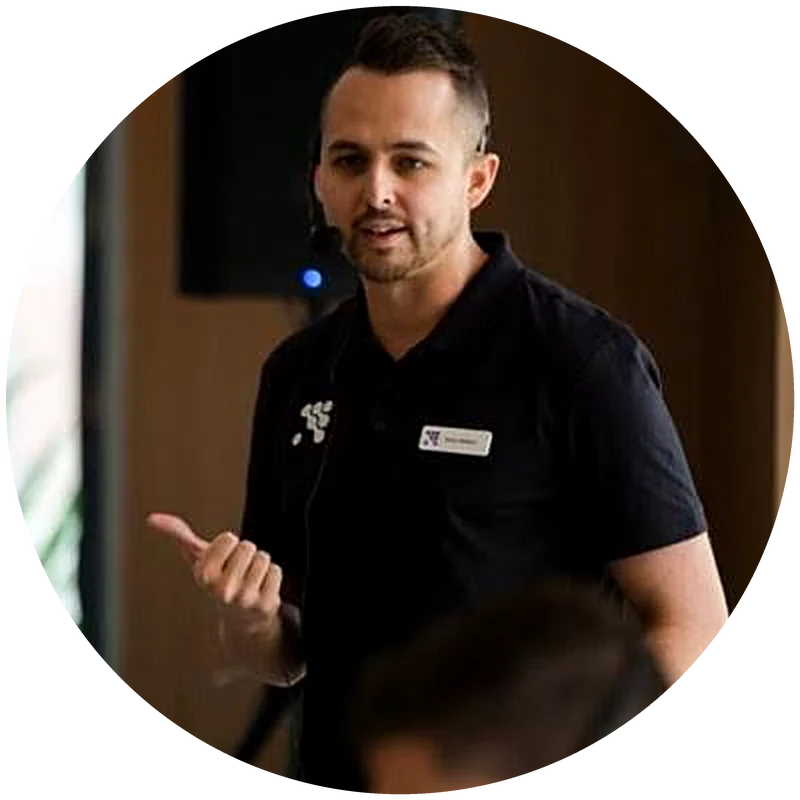
Sean Melton is the founder of First Byte, a digital marketing agency in The Woodlands, TX. A former global CMO of a $250M software company, he has spent his career inside the businesses he markets. His team runs paid social, search, CTV and creative for brands like Equinox, Kroger and Viceroy, and shares what works here.