When someone in Spring or Conroe needs a service, they don't open a laptop — they grab the phone in their hand. The majority of local searches happen on mobile, often with immediate intent ("open now," "near me," "call"). That means your website's mobile experience isn't an afterthought to the "real" desktop site. For a local service business, mobile is the main event.
Yet plenty of business sites are still designed desktop-first and merely squeezed onto a phone — and it shows. Here's why mobile-first matters and what it looks like done right.
Mobile-first means designing for the small screen first
Mobile-first flips the old process. Instead of building a desktop site and shrinking it, you design for the phone first — the hardest constraint — and scale up to larger screens from there.
The payoff is a site that's genuinely fast, easy to read without zooming, and effortless to tap, exactly where most of your traffic actually is. Buttons are big enough for thumbs, text is legible at arm's length, and nothing important hides below a wall of squeezed content.
Google ranks you based on your mobile site
This is the part many owners miss: Google uses mobile-first indexing, meaning it primarily looks at the mobile version of your site to decide how you rank — even for searches done on a desktop.
So a clunky mobile experience doesn't just frustrate phone users; it drags down your rankings everywhere. If your mobile site is slow or hard to use, you're handing an advantage to every competitor whose isn't.
Make the next step effortless
Mobile users are usually ready to act, so remove every ounce of friction between interest and contact. A tap-to-call phone number, prominent buttons, and a short, simple contact form are what turn a mobile visit into a lead.
If a customer has to pinch, zoom, and hunt for your number, most won't bother — they'll just tap the next result. Make calling or messaging you the easiest thing on the page.
Want a site that wins on mobile? See how we build them or get in touch.
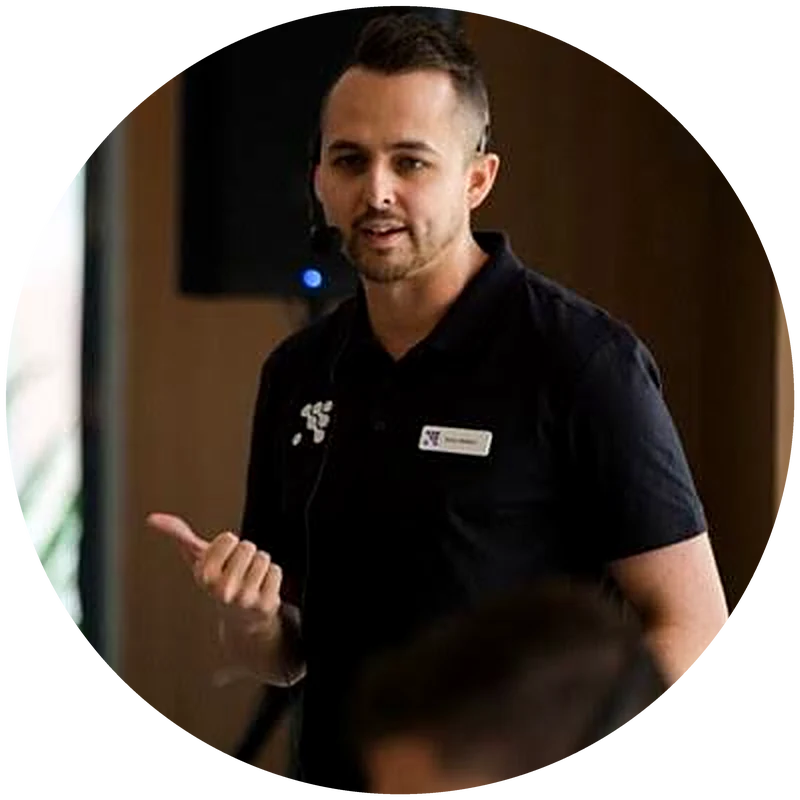
Sean Melton is the founder of First Byte, a digital marketing agency in The Woodlands, TX. A former global CMO of a $250M software company, he has spent his career inside the businesses he markets. His team runs paid social, search, CTV and creative for brands like Equinox, Kroger and Viceroy, and shares what works here.